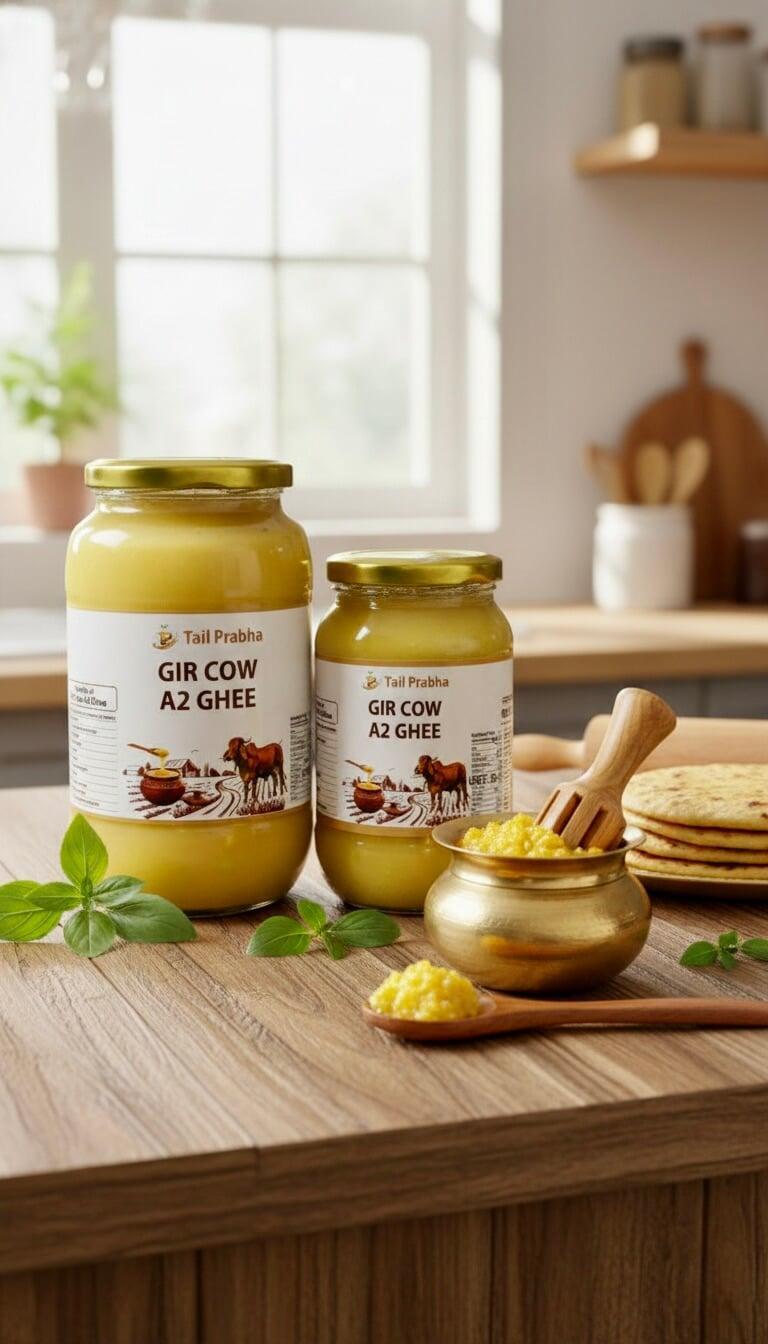
From Vedic Altars to Modern Kitchens: The Golden Journey of Desi Ghee
If you grew up in an Indian household, the aroma of warm ghee likely holds a special place in your memory. It is the finishing touch on a steaming bowl of dal, the soothing warmth in a grandmother’s recipe for a sore throat, and the sacred flame in our morning prayers.
But have you ever wondered where this "liquid gold" actually comes from?
The story of ghee is as old as Indian civilization itself. It is not just an ingredient; it is a survivor of thousands of years of history.
The Vedic Era: When Ghee Was "Ghrita"
Long before cooking oils lined supermarket shelves, our ancestors had identified the perfect fat. In the ancient Vedas, ghee is referred to as Ghrita. It was considered so pure that it was the primary offering to Agni (the fire god) during yagnas. The belief was simple: what you offer to the divine must be the purest substance on earth.
This reverence wasn't just spiritual. Our ancestors were practical scientists. They realized that in the hot climate of India, butter would spoil quickly. By slowly simmering butter to remove the milk solids and water, they created a golden liquid that could last for months without refrigeration. This was the first "shelf-stable" food of the ancient world.
The Lost Art of "Bilona"
History also tells us that how you make ghee matters just as much as the milk you use.
For centuries, there was only one way to make ghee in India, and it wasn't by putting cream in a machine. It was the Bilona method, a slow, rhythmic process that many of us have forgotten.
Boiling: Fresh A2 milk from indigenous cows (like the majestic Gir breed) is boiled.
Curdling: The milk is turned into curd (dahi) in earthen pots.
Churning: The curd is hand-churned with a wooden Bilona to extract the butter (makkhan).
Heating: This butter is slowly heated over a low flame to create golden ghee.
This method is crucial. When you churn curd instead of cream, you get a distinct, grainy texture and a nutty aroma that factory-made ghee simply cannot match. It is lighter on the stomach and easier to digest.
The Gir Cow Connection
Why do we talk so much about the Gir cow? In our history, the "Desi Gau" was a family member, not a factory number. The Gir cow, native to the forests of Gujarat, is famous for its distinctive hump. This hump is believed to contain a specific vein (Surya Ketu Nadi) that absorbs energy from the sun, which passes into the milk.
This is the source of A2 proteins. Unlike the A1 protein found in many western breeds, A2 protein is natural to the human body and mimics the structure of mother's milk. It is the reason why traditional Indian ghee was traditionally considered medicinal in Ayurveda, used to sharpen memory (Smriti) and boost digestion (Agni).
Bringing History to Your Home
At Taila Prabha, we realized that somewhere along the way, we traded this "slow food" for fast convenience. We replaced the Bilona with industrial centrifuges. We replaced Desi cows with high-yield hybrids.
We wanted to change that.
Our A2 Gir Cow Ghee is an attempt to turn back the clock. When you open a jar from Taila Prabha, you aren't just smelling clarified butter. You are smelling the history of a civilization that valued purity above all else. We stick to the traditional Bilona method because we believe some shortcuts just aren't worth taking.
Whether you are lighting a diya for your morning pooja or drizzling a spoonful over your hot paratha, you are participating in a ritual that has sustained India for over 3,000 years.